
Search Indiana Dissolution of Marriage Records
Indiana dissolution of marriage records are public documents kept by the Clerk of the Circuit Court in the county where the divorce was granted. All 92 Indiana counties maintain their own case files, and records may go back many decades. You can search dissolution of marriage cases online through the state MyCase portal, request copies in person at a county clerk's office, or submit a written request by mail. This guide covers every path to finding and obtaining dissolution of marriage records across Indiana.
Indiana Dissolution of Marriage Quick Facts
Where Indiana Keeps Dissolution of Marriage Records
Indiana does not have a central state office for divorce decrees. Each county Clerk of the Circuit Court holds the full case file for every dissolution of marriage filed in that county. That file includes the petition, the other spouse's response, any provisional orders, settlement documents, property agreements, and the final decree signed by the judge. The clerk is the official custodian of these records under Indiana Administrative Rule 7. You must contact the county where the divorce was granted to get any part of that file.
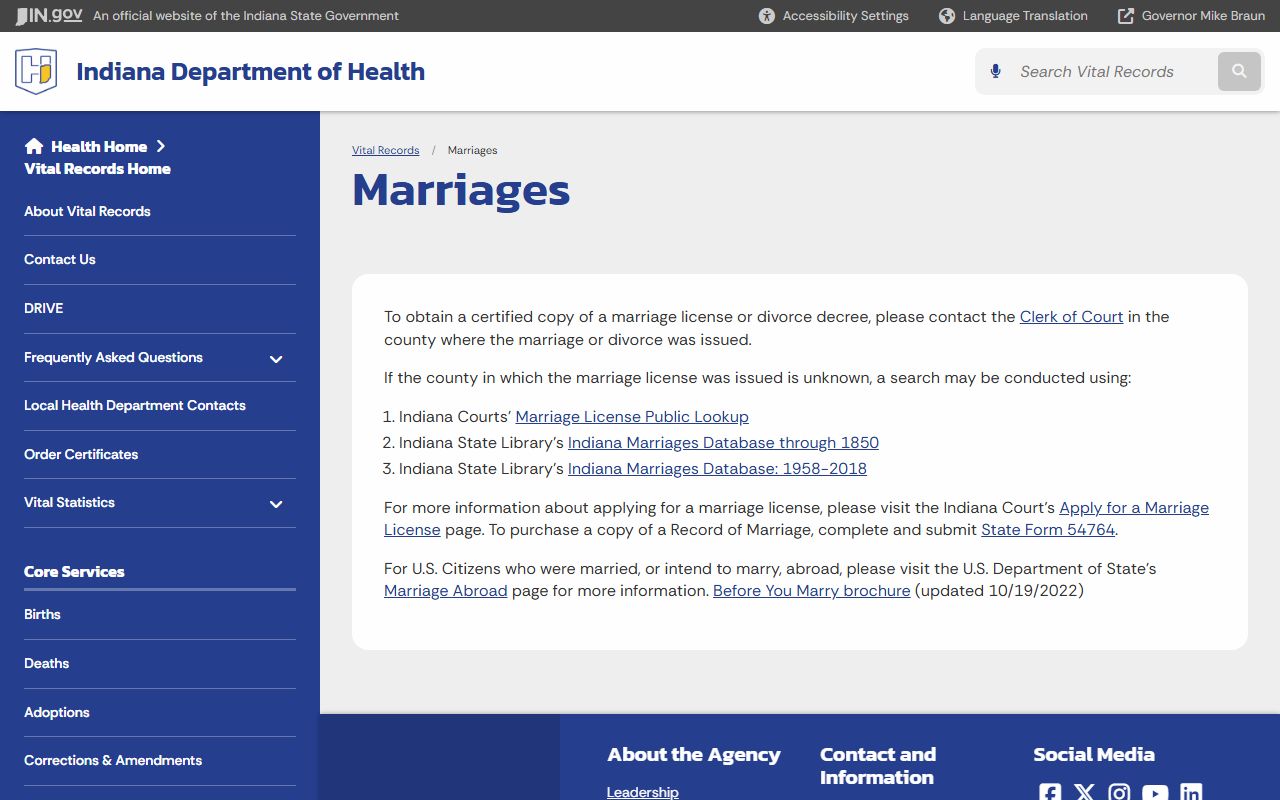
The Indiana State Department of Health vital records office maintains a marriage index for records from 1958 to 1996, but it does not hold certified copies of dissolution decrees. Their page makes this clear: to get a certified copy of a divorce decree, you must contact the Clerk of Court in the county where the case was filed. Many people search the state health office first and come away empty-handed. Go to the county clerk instead.
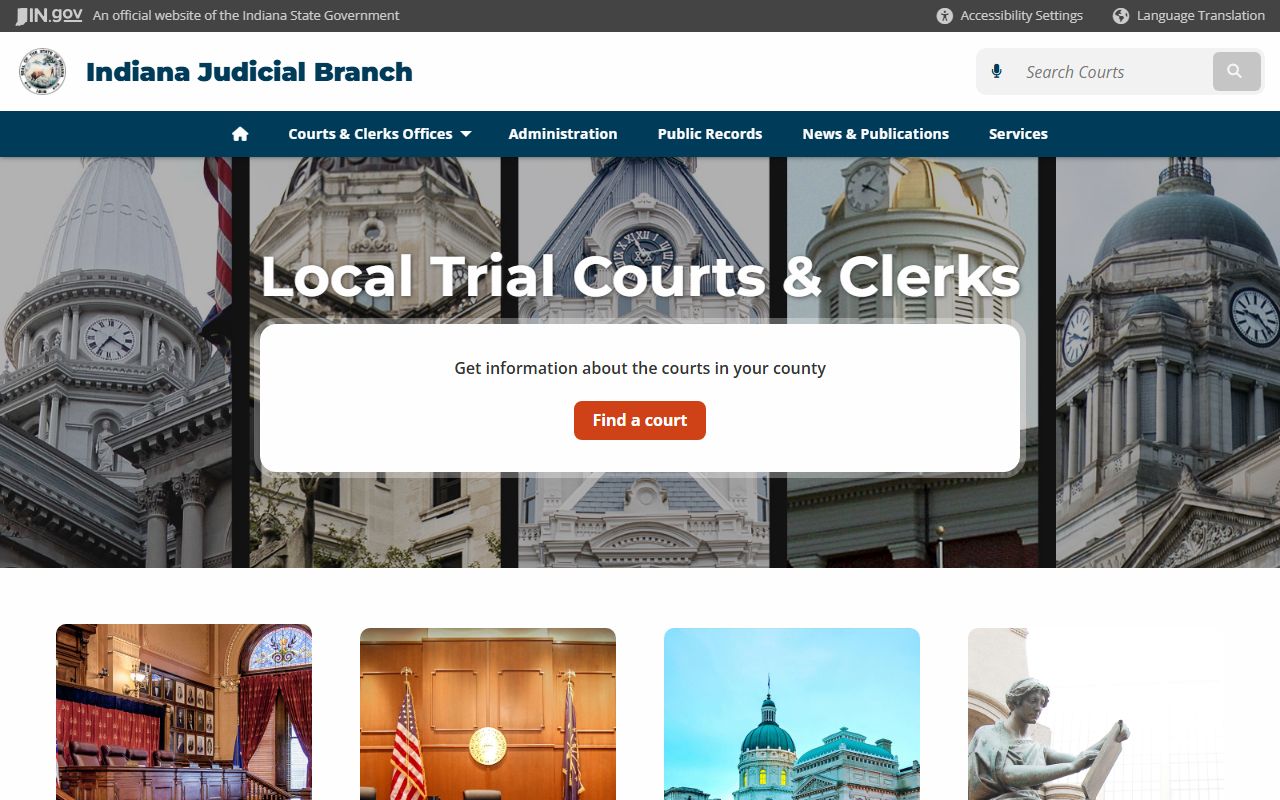
The Indiana Judicial Branch lists every county court and clerk at in.gov/courts/directory. You can look up the address, phone number, and office hours for any of the 92 county clerks in Indiana from that page.
Search Indiana Dissolution of Marriage Cases Online
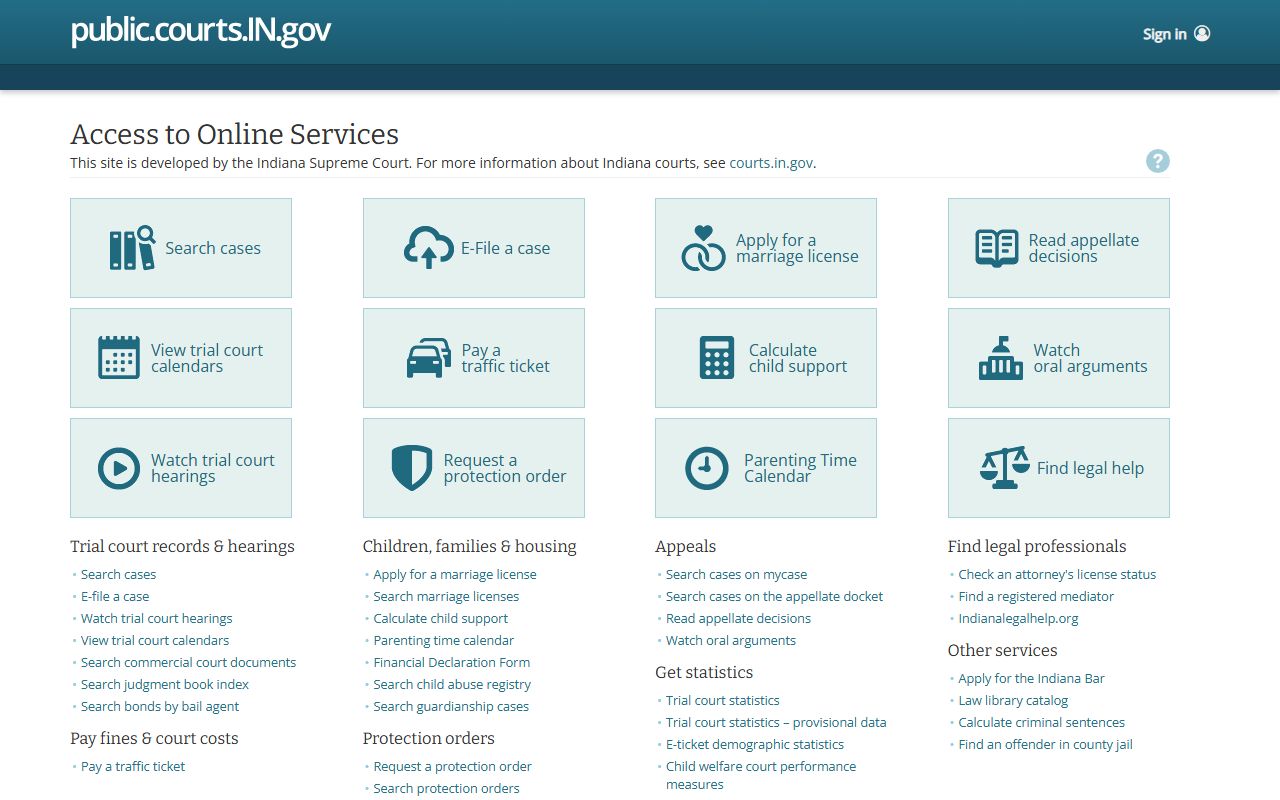
The state runs a free public portal called MyCase at public.courts.in.gov. It lets you search court cases by name or case number, including dissolution of marriage filings. Basic case details like filing dates, party names, and case status are often available at no charge. The portal also gives access to protection orders, child records, and other court collections.
Not every Indiana court uses MyCase, and the depth of records varies by county. The portal notes: "how far back the records go varies by county." If a document is not viewable on the portal, the only option is to contact the clerk's office directly. You cannot print or download certified copies from MyCase. It is a search tool, not a records delivery service. Still, it is the fastest free way to confirm whether a dissolution case exists in Indiana courts and to get a case number before making a formal records request.
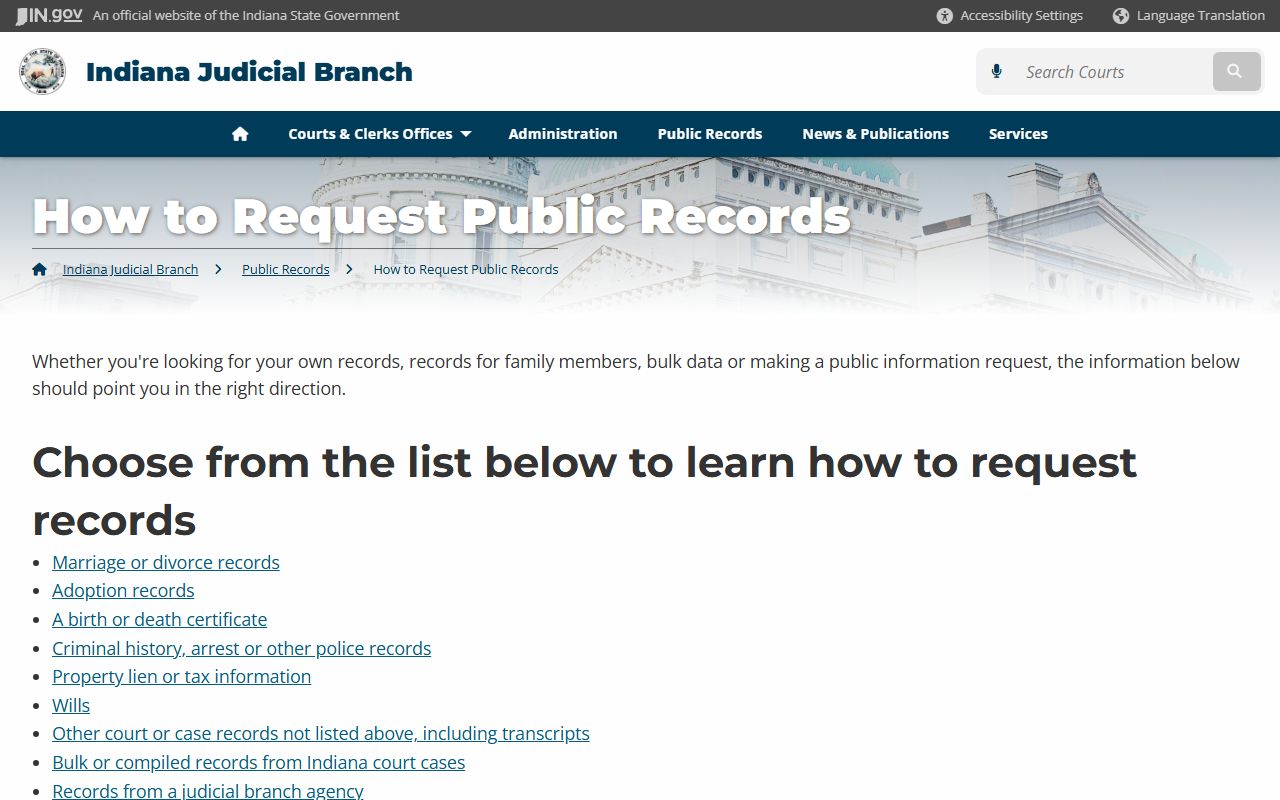
Doxpop is an official third-party provider of Indiana court records. Data on Doxpop comes directly from Indiana courts, clerks, and county recorders. It covers many dissolution of marriage filings and can be a useful alternative when MyCase does not include a particular county's older records. The Indiana Judicial Branch public records guidance page also explains what kinds of documents you can request and how the process works statewide.
Indiana Dissolution of Marriage Filing Process
Every dissolution of marriage case in Indiana starts with a petition filed at the county Circuit Clerk's office. The petition must state that the marriage has suffered an irretrievable breakdown, which is the standard no-fault ground under IC 31-15-2-3. Other grounds exist, including conviction of a felony after marriage or impotence existing at the time of marriage, but most Indiana cases proceed on irretrievable breakdown. Once filed, the case gets a number and becomes a public court record.
Indiana law requires a mandatory 60-day waiting period. Under IC 31-15-2-13, the court cannot hold a final hearing until at least 60 days after the petition is filed. This waiting period applies to every dissolution case in Indiana, regardless of how straightforward the case is. During this time, the court can issue provisional orders for temporary custody, child support, or use of the marital home under IC 31-15-4. Those orders become part of the case file and are public record.
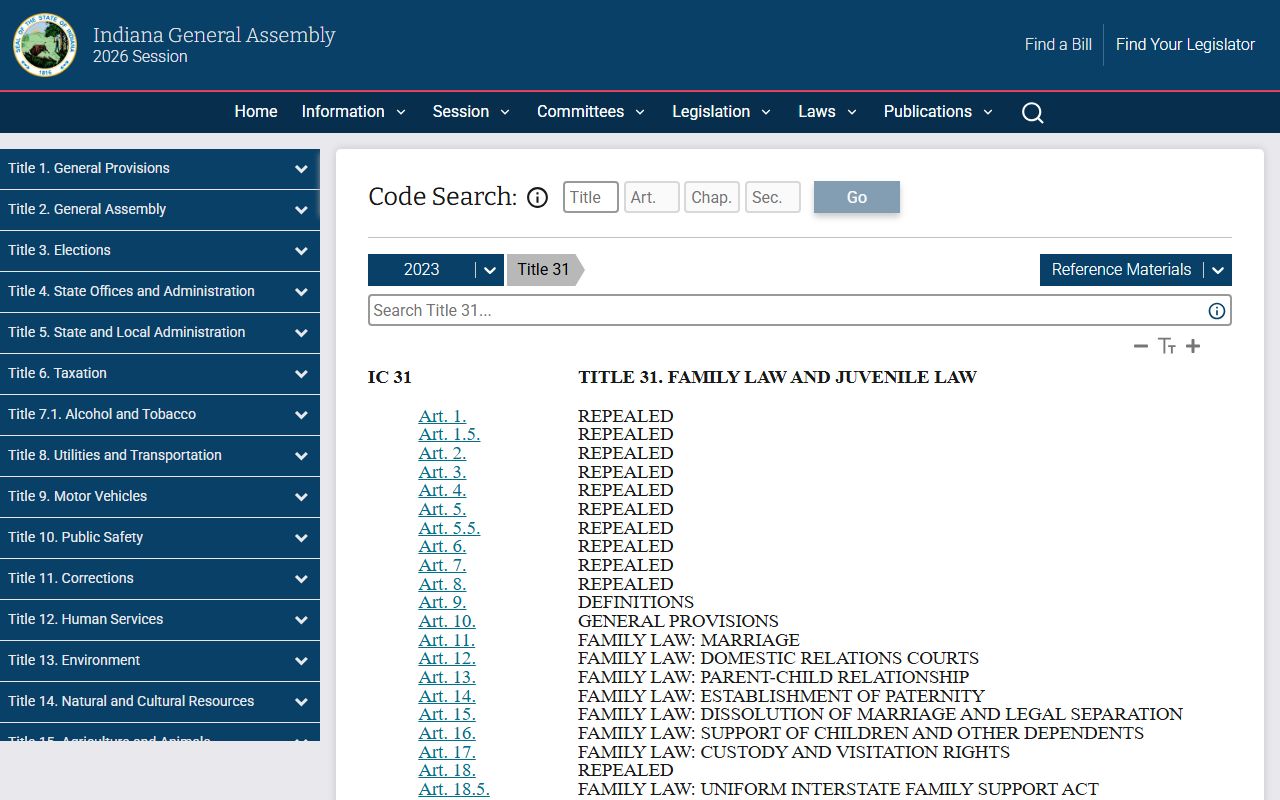
One spouse must have lived in Indiana for at least six months before filing. You must also have lived in the county where you file for at least three months. These residency rules are set by statute. The final dissolution decree ends the marriage legally and sets all terms for property, custody, and support. Read Indiana Code Title 31 in full at iga.in.gov.
Indiana Dissolution of Marriage Documents
A dissolution of marriage case file in Indiana holds many types of papers. The petition is the first to arrive. It names both parties, states the grounds for dissolution, and says what the petitioner wants from the court. The response from the other spouse follows. After that, the file may grow to include settlement agreements, parenting plans, financial affidavits, and orders from the judge. Each paper that gets filed becomes part of the official record.
The final decree is the document most people need. A judge signs it after the case is done. It covers every resolved issue: who gets the house, who has custody, the visitation schedule, child support amounts, and any spousal maintenance. Certified copies of the final decree are commonly needed to change a name, update a title, or complete other legal matters. You get certified copies from the Circuit Clerk in the county where the case was filed.
Dissolution records in Indiana typically contain the following:
- Full legal names of both spouses
- Date and place of the original marriage
- Date the petition was filed and the case number
- Date and terms of the final dissolution decree
- County and court that handled the case
- Property and debt division terms
- Custody, visitation, and support orders if children were involved
Property is divided under the equitable distribution rule found in IC 31-15-7. Equitable does not always mean equal. Indiana courts weigh factors like each spouse's income, contributions to the marriage, and economic circumstances when dividing assets in dissolution cases.
Fees for Indiana Dissolution of Marriage Records
Copy fees vary by county in Indiana. Most clerks charge $1.00 per page for copies and a separate certification fee. Marion County charges $1.00 per page plus $3.00 for certification, so a certified one-page decree costs $4.00 total. Other counties charge $1.00 per page and $1.00 for certification. Search fees also vary. Many clerks charge $5.00 per name for a records search. Call the clerk in the county where the case was filed to get the current rates before you visit or mail a request.
Filing a new dissolution of marriage case costs more. Petition fees in most Indiana counties run from $132 to $157, plus additional court costs. Cases involving children may carry extra fees. If you cannot pay, ask the court to waive the fees by filing an In Forma Pauperis petition. The judge reviews your financial situation and decides whether you qualify for the waiver.
Note: The Lake County Clerk accepts credit and debit cards for in-person payments with a 3% convenience fee. American Express is not accepted. Other counties vary, so ask about payment methods when you call.
How to Get Indiana Dissolution of Marriage Copies
Going in person to the county clerk's office is the most direct way to get dissolution of marriage records in Indiana. Bring a photo ID. Know the names of both parties and, if possible, the approximate year the case was filed. Most clerk offices are open Monday through Friday during regular business hours, though hours differ by county. Some offices close for lunch. Staff can search the records and make copies while you wait.
Mail requests are accepted at most Indiana county clerks. Write a letter with the full names of both spouses, the year of the dissolution, and the case number if you have it. Include payment for the copy fees by check or money order made out to the county clerk. Mail it to the clerk's office in the county where the divorce occurred. Processing times range from a few days to a few weeks, depending on the workload of that office.
For searches, start at public.courts.in.gov to find basic case information at no cost. When you need certified copies, contact the clerk's office directly. The Indiana Courts Directory has the address and phone number for all 92 county clerks. For historical dissolution records and genealogy research, the Indiana State Library genealogy division holds marriage indexes and can help you find older records.
Legal Help for Dissolution of Marriage in Indiana
Indiana Legal Services provides free help to people with low income who need assistance with dissolution of marriage cases. They work on family law matters across the state, with a focus on cases that involve domestic violence. Their website lists office locations and explains how to apply.
If your dissolution of marriage case involves abuse or safety concerns, the Indiana Coalition Against Domestic Violence can connect you with local resources. Their statewide line is (800) 332-7385. They work alongside legal aid organizations and shelters to help people navigate these situations. You do not need a lawyer to file for dissolution in Indiana, but getting legal guidance can make a big difference in the outcome. The Indiana Judicial Branch records page has guidance for people who handle their own cases.

The Indiana State Library at 315 W. Ohio Street, Indianapolis, IN 46202, phone (317) 232-3675, is a valuable resource for historical dissolution cases. Their genealogy division holds the Indiana Marriages Database covering records through 1850 and from 1958 to 2018. Staff can help you find older dissolution records that predate online systems.

Public Access to Dissolution Records in Indiana
Dissolution of marriage records are public in Indiana. IC 5-14-3, the state's Access to Public Records Act, gives every person the right to inspect and copy public records held by state and local agencies, including county courts. You do not need to be one of the parties named in the case. You do not need to give a reason for your request. The records are open to anyone who asks.
Some information may be restricted within a file. Courts routinely remove Social Security numbers and financial account numbers from public copies. Details about minor children may also be limited. A party can ask a judge to seal their dissolution file, but sealed records are uncommon in Indiana. A strong legal reason must exist for a judge to grant that request. Most dissolution cases remain open to the public in full.
Indiana Administrative Rule 7 requires courts to keep records according to state retention schedules. Circuit Clerks serve as the official custodians. This rule ensures dissolution case files are preserved and accessible for as long as they are needed.
Browse Indiana Dissolution of Marriage Records by County
Each of Indiana's 92 counties has a Circuit Clerk who keeps dissolution of marriage case files. Select a county below to find the local clerk office, contact information, and resources for that area.
Dissolution of Marriage Records in Indiana Cities
Indiana cities file dissolution of marriage cases at the county Circuit Court. Pick a city below to find the clerk office and resources that serve that area.